

Social lubricants, personhood as spaces, and listener-led podcast ads
The Social Times: Issue 004

The Social Times is a weekly snapshot of society and culture from the perspective of a sociologist. You’ll find musings, conversation starters, and reflections about how we’re living and relating to one another.


What if there was a substance we could all take to make socializing with other humans more tolerable? One company is trying to build a world in which that’s a thing.
In the past week, I’ve been served several Instagram ads for Wims — a beautifully branded company that sells cannabis drink mixers that you can add to any beverage to ~*take the edge off*~ your social experiences.
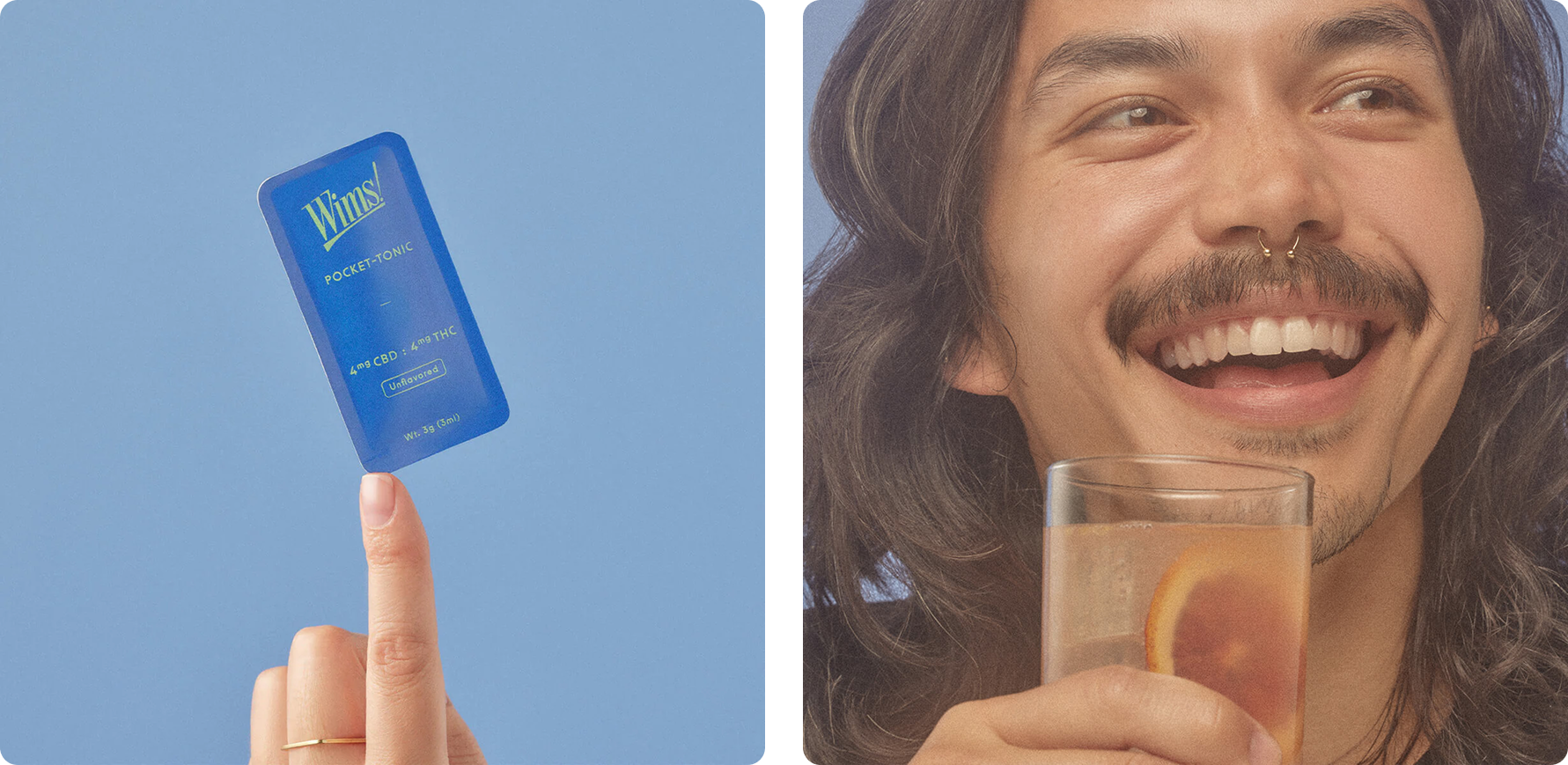
The first line in their Instagram bio reads “The Sociables Company”.
Wims markets their mixers as pocket-sized social aids to be used during any moment when you might need to interact with people.
Self-medicating (or soothing) with cannabis for a range of ailments, including social anxiety, is not new at all. So, what’s my issue?
Wims caught my eye for three reasons:
The niche they’re trying to carve out as “the sociables company”. It suggests there is more to come in the realm of non-alcoholic social lubricants and there just might be enough demand for them to create an entire business around it.
The unseriousness of the use cases they suggest and their encouragement to become reliant on this type of product for any and all social experiences.
What the “problem” this product aims to solve reveals about our decreasing ability to tolerate friction in our physical world.
Manufacturing a more sociable world
According to the dictionary, to be sociable is to be “willing to talk and engage in activities with other people.” It’s friendliness. It’s enjoying being with and around people.
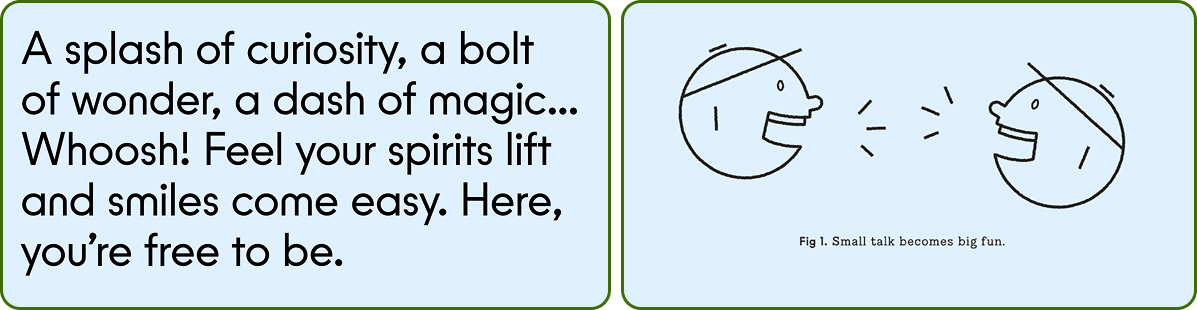
In the world of Wims, “sociable” is a noun and a category name for their products. They’ve implicitly defined “sociables” as edible tools that transform any social context into a friendly one. They claim to heighten your sense of curiosity, wonder, and delight to make even the most mundane interactions, like small talk, feel magical. Whether or not you are personally sociable is irrelevant.
The re-assignment of “sociable” from an adjective to describe a person to a noun identifying a type of product is clever from a brand messaging perspective, but feels uncanny in context. The onus to make a social interaction a good one is no longer on you, the people you’re with, and your collective social skills. Wims argues that enjoyment is just about shifting your perspective. By simply turning the volume up on certain feel-good sensations and drowning out the potentially bothersome ones, you can biohack your way into a more sociable reality.
Naturally, when we talk about social lubricants, our minds first go to alcohol — the OG lube. It’s interesting to compare how the two — alcohol and cannabis — are used in social settings. For the socially rigid, both help you loosen up. But, you are more likely to hear someone who drinks alcohol socially say they become more outgoing and tolerable to others when buzzed. In contrast, you typically hear people who smoke or ingest cannabis socially say the world becomes more tolerable to them when high. The latter is fitting for Wims’s mission, which focuses more on how to alter your experience of a social environment rather than alter how you behave within them.
We’ve been in a sober-curious era for a while now, and non-alcoholic cocktails and spirit brands that infuse their beverages with adaptogens and cannabis are doing well in the market. Is this a sign of the times not just in health trends, but also in social trends? Could it be that people are becoming less concerned about performing socially and more concerned about coping socially? Will we see more “sociables” being developed to tweak our realities so that the people and experiences within them are constantly being tailored to our needs and comfort?
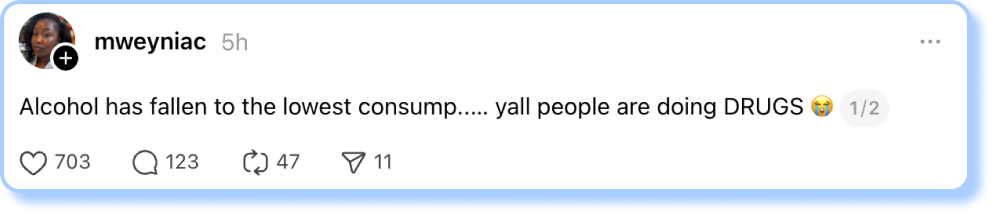
Everything is a drag. Even brunch.
Wims’s point of differentiation is an insistence that social settings need to be reimagined with the help of substances. At every brand touchpoint (social, website, ads, etc.), their messaging centers socializing. They offer many examples of such social settings in which one might want to improve the vibes with their pocket-tonics. This includes: “a night out in your tent, brunch after yoga, that concert in the park, drinks before dinner, [and] an afternoon tailgate.”
Okay, interesting.
Alcohol is a fixture of many social environments as well. But marketing these drink mixtures as an aid specifically to improve social situations that are incredibly trivial or would already be enjoyable makes it strange. Do smiles not already come easy when you’re at brunch with friends? Is a game of pickleball spirit-lowering until cannabis is in the mix?
A quick glance through the highest rated edible THC/CBD brands within Thingtesting’s directory demonstrate how Wims stands alone in its messaging strategy — for better or for worse.
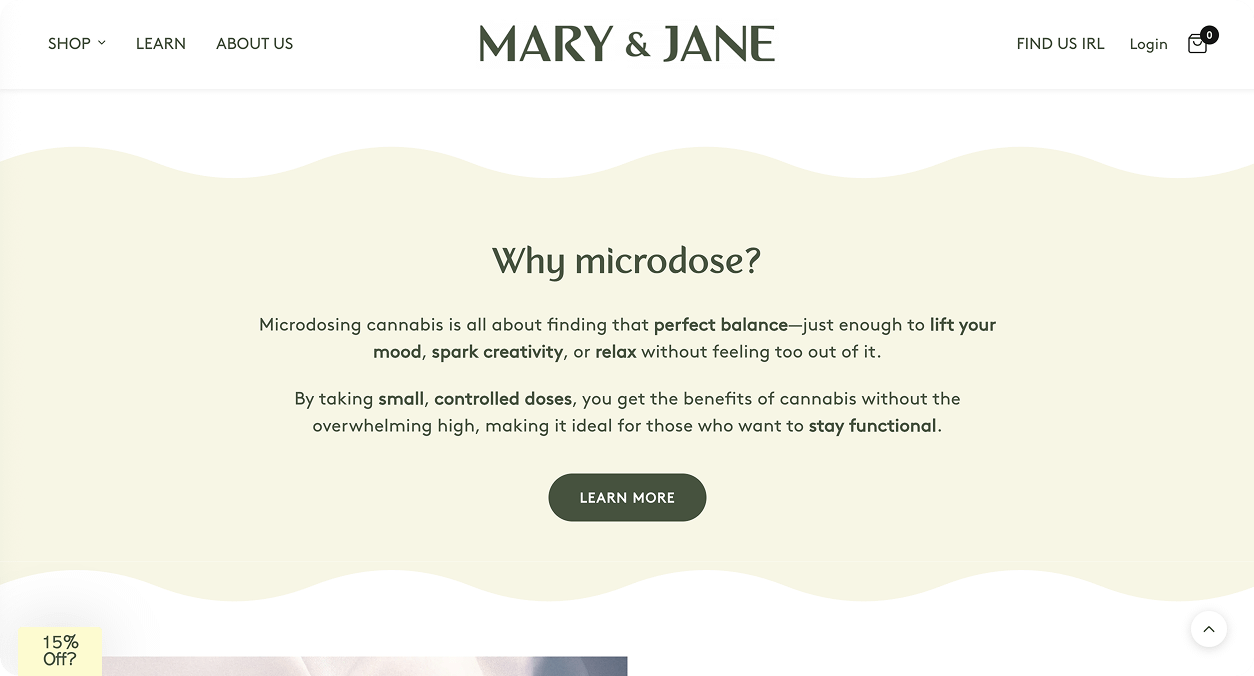
Mary & Jane’s whole thing is making cannabis more approachable through smaller doses packaged in fast-acting melts. Their melts are categorized into three functions: get happy, get sleep, get energy. These use cases are not dependent on anyone else being there.
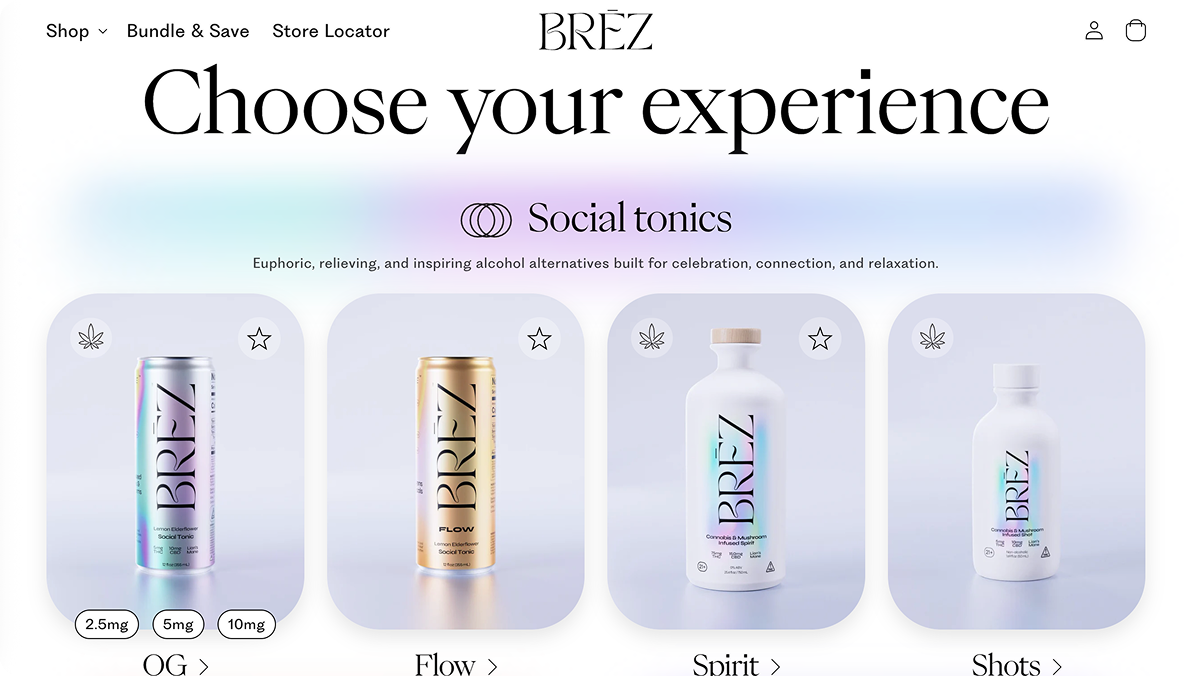
Brez, a THC beverage company which actually has a line of “Social Tonics”, pitches these products as a non-alcoholic alternative for social moments where people are more likely to already be imbibing.
Their wording of the use cases—“built for celebration, connection, and relaxation”— make their products additive and designed to fit in with an already desirable moment. They don’t triangulate customers against the social setting and the need for a social lubricant to make it good.
Where most cannabis brands focus on helping with mood improvement, stress reduction, anxiety relief, better sleep, and hangover-free fun, Wims zeroes in on socializing as the problem to be solved. From a business perspective, their TAM (total addressable market) explodes by taking this angle — every adult who socializes and can physically ingest cannabis is a good candidate for their product. But that means their cultural thesis carries an undertone of dissatisfaction with how social interactions inherently feel.
They make socializing itself the thing that needs to be fixed. They aren’t speaking to perhaps the socially anxious or awkward person who could take something to feel more comfortable around others, especially in high-stress social environments. In Wims’s world, whether you’re a socialite or a wallflower, chilling poolside with friends or going to a concert, socializing of any kind is a drag. It’s best to keep a Wims pocket-tonic on hand in case you have to interact.

Our feel-good future…or not?
I’m not here to litigate the quality of Wims’s products or the use of cannabis in general. I want to examine what the motivation behind Wims and its messaging says about where we’re heading societally.
Every company with the goal of scaling has a mission (what they aim to help customers achieve in the day to day) and vision (the impact they hope to have long-term).
When I develop brand strategies for my own clients, I always ask “to what end”? What does this mission and vision look like at full scale?
At the moment, Wims is innocuous — a niche lifestyle brand that has yet to reach critical mass. But, if they were to reach as many customers as their pitch decks project they will, what would that look like? Millions of people who always need to be a little high to enjoy their social lives? Is that sustainable?
We’re progressively becoming worse at socializing. From going great lengths to “protect your peace” to being fearful of having to navigate a minefield of political and social extremism out in the world, many have retreated inwards (and further into the safety of algorithmic echo chambers and digital environments that are designed to serve us).
As our digital world becomes more and more frictionless, our threshold for tolerating naturally occurring friction in the physical world lowers. Economic commentator kyla scanlon has written a great deal on this topic.
Thanks to our dopamine-driven tech, our new baseline is feeling good. And we equate feeling good with ease, efficiency, and entertainment. Experiencing anything less than, even if mildly so, feels devastating now. We lack the emotional tools to handle human idiosyncrasies and unexpected behavior that we might encounter out in the physical world. What do you do when someone doesn’t behave like an AI chatbot and do as you say? Are you prepared to do more than swipe left or right to make a new friend? What if someone you’re in relation with doesn’t exist to entertain you?
“Sociables” function to reduce the friction that can come with interacting with other humans by editing how you receive and process your reality. But they don’t address the factors that are actually making socializing increasingly intolerable for people, or rather, that are making people unable to tolerate socializing.
In her essay, The Most Valuable Commodity in the World is Friction, Kyla points out that friction is never truly eliminated, just displaced:
“…we have a world where friction gets automated out of experiences, aestheticized in curated lifestyles, and dumped onto underfunded infrastructure and overworked labor. The effort doesn't disappear; it just moves.”
Friction in the social environment is not just conflict and anger. Friction is effort. It’s the inefficient actions of care, the challenging work of showing up, and the allocation of attention to a far more expansive set of emotions than simply euphoria and amusement. We need friction.
A frictionless social experience is an effortless social experience. One where things are so smooth they’re slippery and difficult to grasp or build anything on top of.
I wonder, then, where this friction gets offloaded to and who or what will suffer because of it?
Kyla promises “the system always balances its books eventually. The more we optimize individual experiences for frictionlessness, the more collectively dysfunctional our systems become.”

As Softer Skills takes shape, it’s becoming more clear to me that I fall into the camp of wanting to help people (re)build emotional and social toolkits to engage more richly in the human experience.
I don’t believe we need products and services that exploit the ways we’ve become crippled by technology and that are bringing humans and machines closer to becoming one. I believe we need to build cultures and systems that are rooted in drawing out the best of humanity. When it comes to substances and social lubricants, I’d love to see more investment in natural ones that we can self-produce like resilience, earnestness, and care.

A prompt to spark a conversation with yourself or someone else this week.
If you were a place or space, what would you be? A secret garden, a library, a backyard with a hammock, a speakeasy?

Wondered: What are other roles someone can play in a community besides the “host”? In my last musing, I talked about the importance of active participation and a sense of responsibility in building strong communities. At the moment, it feels like there’s a binary system: you’re either the community host/organizer who does literally everything or you’re a member whose job is mainly just to just show up. While showing up is important, I wonder if there are any other responsibilities, spoken and unspoken, that leverage the talents, resources, and time that different community members have?
Heard: Corporate Gossip’s community-based advertising model for their podcast. Rather than taking paid sponsorships from large corporations, listeners with small or independently run businesses can submit an ad to be read aloud on an episode. They have a tiered pricing model depending on the size of your business and what you’re able to pay. This is the type of win-win-win situation that I would like to see as we commingle community and business. The hosts still get paid, small businesses get the chance to participate in advertising, and fellow listeners get to hear about people in the community rather random brands.
Into: My new email signature 🌝 I am making gradual updates to how I identify myself in business and online while I build Softer Skills. Between my design studio and this, it’s probably going to be a little messy, but I’m down for the adventure.
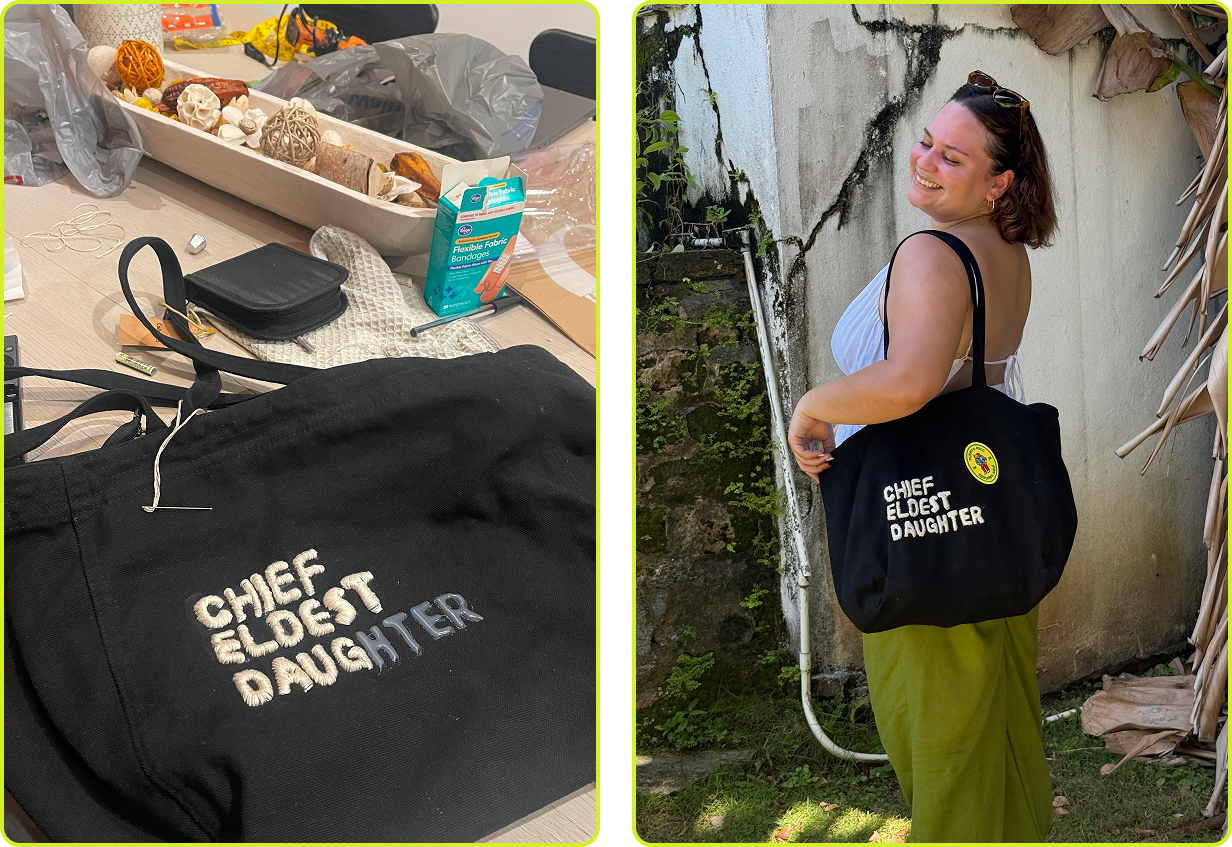
Made: This hand-embroidered tote bag featuring the name of my bestie’s latest venture: Chief Eldest Daughter. It took about 12 hours and the help of my grandma but we were able to finish it in time for her to wear during her birthday trip to Puerto Rico! See: the box of bandaids as evidence of blood, sweat, and tears 😭
Anyway, Chief Eldest Daughter is going to be huge.
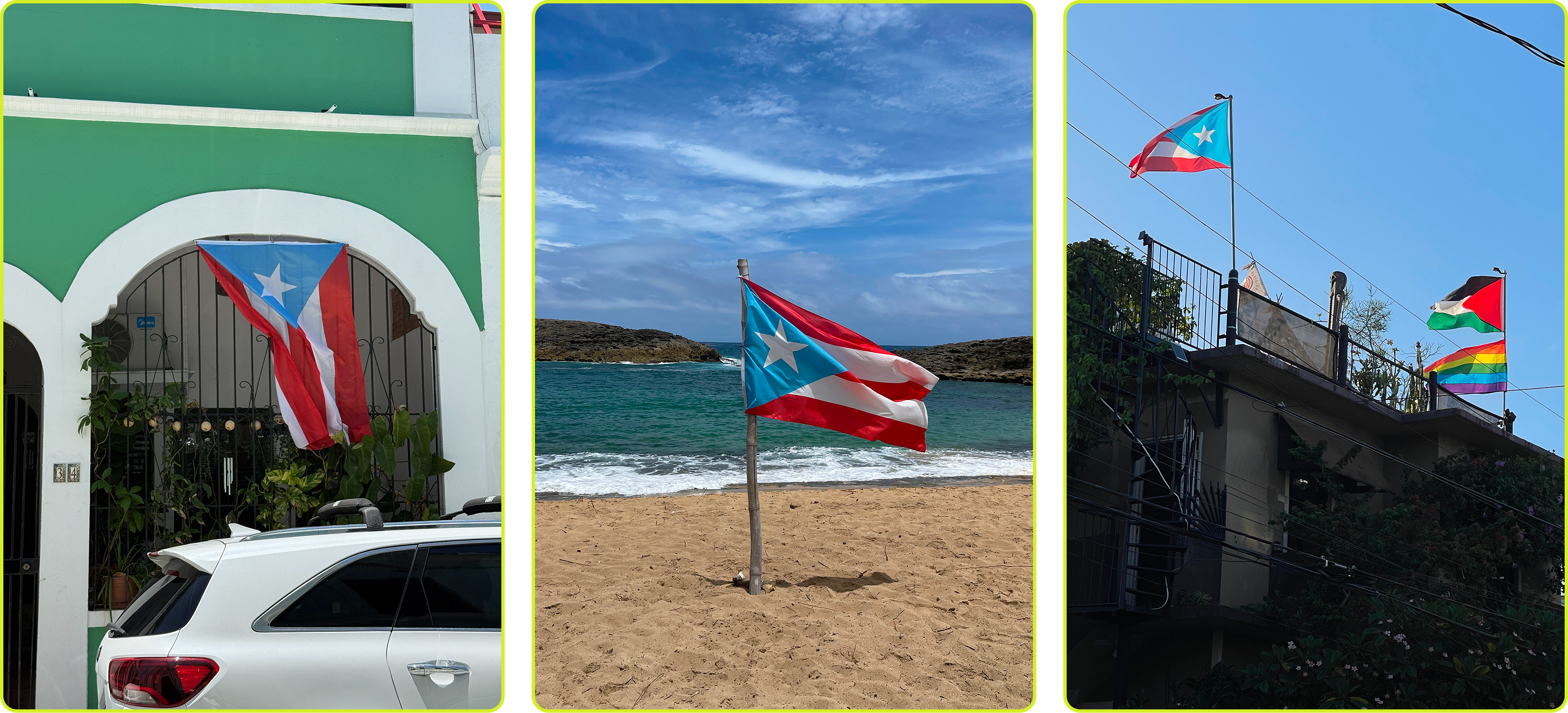
Spotted: So many original Puerto Rican flags! This flag has the light blue color underneath the star and represents support for their independence. Honestly, I barely saw any of the “official” flag, which I stan. Plus, many displays of support for Palestine and queer pride.
I hope this email leaves you well,
Lola

About Softer Skills
Softer Skills is a publication dedicated to studying and discovering better ways to be with ourselves and each other.